iGaming Unlocked: Master Slots, Poker, and Betting Like a Pro
November 03, 2026 - iGaming

November 03, 2026 - iGaming

November 03, 2026 - iGaming
Walk into any casino in Macau, Las Vegas, or Monaco and you'll hear the same cliché whispered across the felt: the house always wins. It's true—on a long enough timeline, the math grinds every gambler into dust. And yet, every single year, a small cohort of players walks away with real, repeatable profits. They aren't lucky. They aren't cheating. They're doing something the average punter never bothers to learn: understanding edge, variance, and where the game is actually beatable.
Whether you're spinning slots at 3 AM, grinding micro-stakes poker, or shopping for value on a Premier League match, the difference between a losing hobby and a profitable pursuit comes down to a handful of principles. Let's break them down without the usual marketing fluff.
Every slot machine on a regulated casino floor publishes a Return to Player percentage somewhere between 92% and 97%. A 96% RTP game sounds nearly fair—you only lose 4 cents per dollar, right? Over thousands of spins, yes. But here's what most players miss: RTP is a theoretical long-run average calculated over millions of spins, and it says nothing about how brutal the swings between those spins will be.
The number that actually describes your experience is volatility. A high-volatility slot like Book of Dead (RTP around 96.2%) can eat 500 spins before delivering a single meaningful hit. A low-volatility game like Starburst dribbles out frequent but tiny wins. Same theoretical RTP, completely different play experience.
A few things worth internalizing: It is also worth checking slot 5000 before deciding.
None of this makes slots beatable long-term. What it does is turn a blind gamble into a managed one, where you know the cost of entertainment before you sit down.
If there's one vertical where a disciplined, informed player can genuinely find value, it's sports betting. Not because bookmakers are stupid—they aren't—but because they price human behavior, and human behavior is predictable.
Sportsbooks bake a margin (the vig, or overround) into every market. On a standard two-way line, the implied probabilities add up to around 105%, meaning the book's theoretical take is roughly 5%. To beat that, you need to find lines where the true probability of an outcome differs meaningfully from the implied probability.
Three practical approaches that working bettors actually use:
The myth of the parlay jackpot is just that—a myth. Ten-leg accumulators carry brutal house edges in excess of 20%. Value bettors almost never touch them.
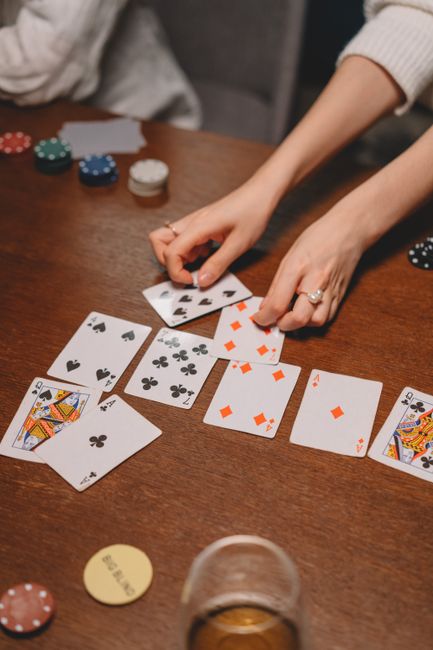
Poker is not gambling in the same sense that roulette is gambling. Over a single session, luck dominates. Over 100,000 hands, skill separates winners from losers with mathematical certainty.
The great thing about poker is that your edge comes from other players' mistakes, not from beating the house. The casino simply takes a rake—typically 5% of each pot, capped around $3-$5 in live games—and lets the players fight it out. If you're the best player at the table, that rake is your only true opponent.
What actually moves the needle for a serious player:
Online poker rooms offer significantly higher hand volume, meaning variance smooths out faster. But the player pool is also tougher than your local cardroom, so the softest games are often at lower stakes and less popular variants like Omaha or Stud.
Here's the part most gambling content skips: sustainable play requires a bankroll that can survive variance without changing your decisions. A €100 bankroll playing €2 spins on slots has a realistic chance of busting inside 30 minutes, even on a 96% RTP game. That's not bad luck—it's arithmetic.
A reasonable framework:
If a single session can wipe you out, you're not gambling—you're hoping. The two feel similar. They are not.
The industry crossed $100 billion in global gross gaming revenue this decade, and online channels now account for a growing majority of that figure in regulated markets. What's changing fastest isn't the games—it's the intelligence layer around them. Live dealer streams now outdraw RNG tables in several markets. Betting exchanges and prediction markets give sharp players an alternative to fixed-odds books. AI-driven analytics tools put line-movement data in the hands of casual bettors, compressing the edge that professionals once guarded.
For the average player, that's mostly good news. More transparency, more competition, better odds. For anyone expecting easy money, nothing has changed—the edge still belongs to whoever does the work.
The line between a gambler and a speculator is preparation. Slots are entertainment with a known, negative expected value—play them with money you can afford to lose and you're simply paying for a thrill, which is fine. Sports betting and poker are different animals entirely. They reward patience, discipline, and a willingness to treat edge like a math problem rather than a hunch.
Nobody beats the house at everything. But the best players in the world don't try to. They find one narrow game, study it until the patterns become obvious, manage their money so variance can't break them, and refuse to make emotionally driven decisions. That's the whole secret. It fits in a paragraph because it really is that simple—and that hard to actually do.
So you've dipped your toes into online casinos, spun a few slots, maybe folded a questionable hand of poker. But...

How to build a moss path that survives British rain: the right base layers, sensible drainage, suitable moss species...
November 03, 2026 - iGaming
November 03, 2026 - iGaming
Copyright © 2026 Moss Path. All Right Reserved.