Building a Moss Path in a Wet UK Climate: Drainage, Base and Aftercare
October 07, 2026 - Garden Paths
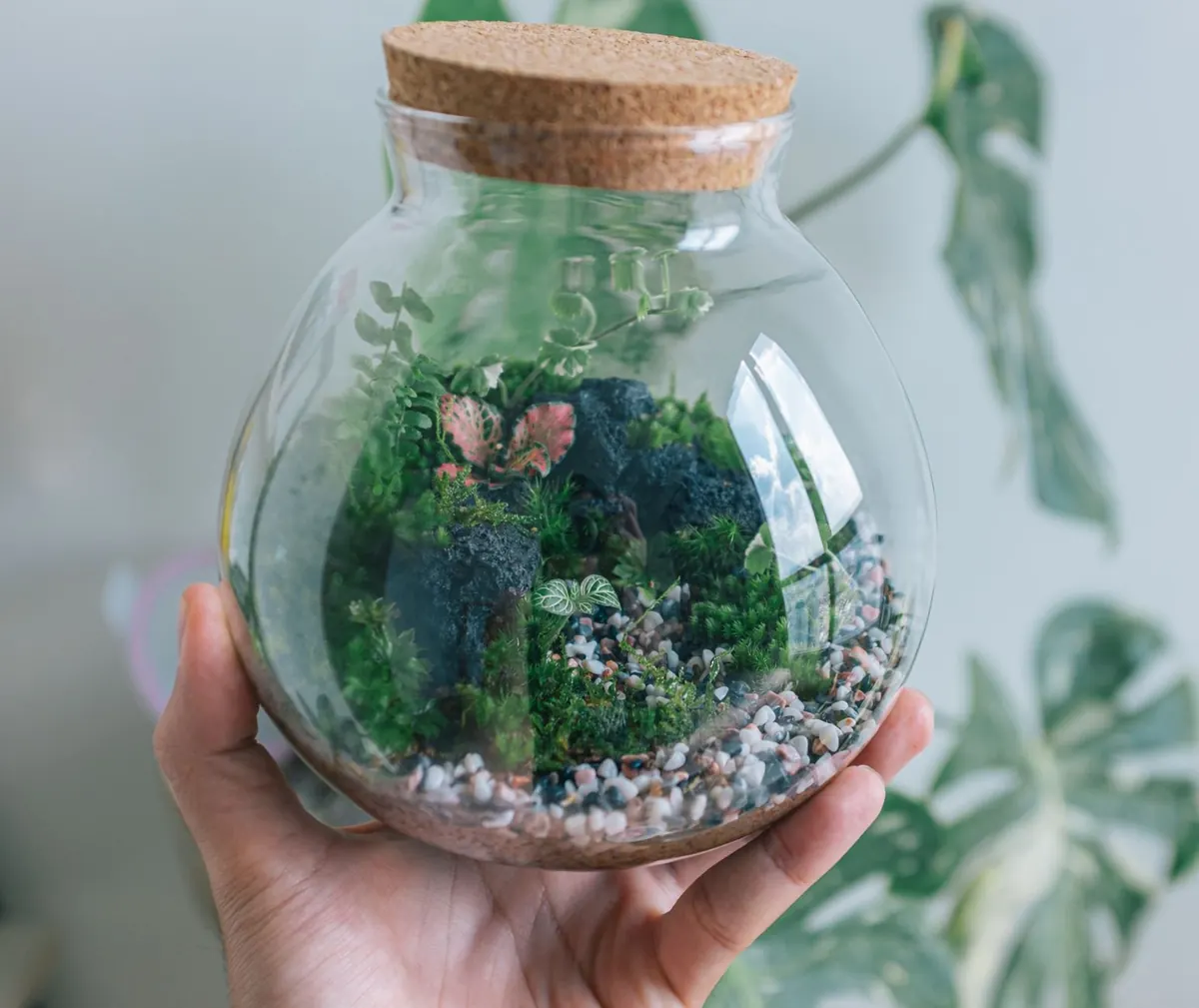
Two mosses turn up in almost every terrarium build, and they are rarely interchangeable. Sphagnum arrives as a bag of pale, springy strands or as a live, star-shaped carpet. Sheet moss arrives flat and pressed, like a piece of woodland floor cut with a knife. Pick the wrong one and you will spend the next few months topping up water or watching bare patches creep across the glass. Pick well and the terrarium mostly looks after itself.
Sphagnum is the bog genus behind peat. In terrarium terms you will meet it in two forms: dried long-fibre sphagnum, sold as a lining, a substrate ingredient or a bed above the drainage layer, and live sphagnum, which grows, spreads and shifts colour when conditions suit it.
Sheet moss is a shop term rather than a species. It usually means a flat, creeping moss — often Hypnum or something similar — sold as a sheet of dried or fresh material. It grows as a low mat rather than an upright clump, and it is the moss most people picture when they imagine a miniature lawn.
Sphagnum is a sponge with opinions. It holds far more water than its dry weight suggests, wicks it upwards and keeps the air around it humid. Live sphagnum wants to be genuinely wet, not merely damp, with its base in contact with moisture and the surrounding air muggy. A closed terrarium gives it exactly that.
Sheet moss wants even moisture and hates a swamp. It has no proper roots, taking water across its surface, so it needs steady humidity or a substrate that stays consistently moist. Leave it bone dry for days and it browns. Much of it revives when rehydrated, but some patches never come back.
There is a practical consequence here that catches people out. A thick layer of sphagnum raises the water table in your substrate, so everything above it stays wet for longer. That suits ferns, most tropical species and carnivorous plants. It is a problem for succulents, cacti and anything that sulks with wet feet. Sheet moss, used as a thin surface layer, has far less influence on what is happening below it.
A simple layout rule: sheet moss goes where you want a lawn, sphagnum goes where you want a mound. Put sheet moss across the front and over gentle slopes, then tuck sphagnum into hollows, corners and the back wall where its messy energy disappears into the planting.
Sphagnum thrives here and will often spread on its own. Sheet moss also does well, provided it is not sitting in standing water. Raise it slightly on a mound, a stone or a piece of wood so its surface drains.
Sheet moss is the better default. It copes with drier air and lower humidity, and it keeps the forest-floor look you are probably after. Sphagnum dries at the surface and turns crispy; keep a little in a sheltered corner if you like it, and mist often.
Neither moss is a natural fit. Sphagnum keeps things far too wet, and sheet moss crisps up within weeks. If you want the look, use a small patch of sheet moss in a shaded pocket and accept that it may need replacing.
Sheet moss wraps and clings well, especially if you tie it down with a little thread until it knits itself on. Sphagnum needs a pocket that holds moisture, and it tends to fall apart once dry.
This is often the best answer. Run sphagnum through the back of the build and around the drainage zone as a humidity buffer, then lay sheet moss across the surface. Keep an eye on the boundary, because sphagnum grows over anything slower than itself. Trim it back every few weeks with scissors rather than pulling, which disturbs the roots of whatever is underneath.
Ask yourself three questions before you buy. Is the terrarium closed or open? Do I want a carpet or a mound? Is the base of the build wet or just damp? Closed and wet points to sphagnum; open and evenly moist points to sheet moss. If you are still unsure, start with sheet moss on the surface and tuck sphagnum behind the hardscape, where it can do no harm if it romps away.
Buy green, springy material and avoid anything crunchy or smelling musty. Give both mosses a fortnight to settle before you judge them; a few brown patches in the first two weeks are normal while they adjust, and steady humidity usually sorts them out. If you want sphagnum without the peat-bog guilt, look for suppliers who state it is cultivated rather than mined, or grow your own from a small handful in a tray of rainwater on a bright windowsill.
Photo: Huy Phan / Pexels

How to build a moss path that survives British rain: the right base layers, sensible drainage, suitable moss species...
Brown moss in a UK summer is usually dormancy, not death. Here's how drought, heat and sudden light cause it, and...
Copyright © 2026 Moss Path. All Right Reserved.